Awe and Nature Exposure: How Time Outdoors Recalibrates the Stress Response
What "awe walk" research suggests about nature, novelty, and stress recovery — and a simple 20-minute protocol that goes beyond generic outdoor advice.
There is a familiar piece of advice that shows up in almost every wellness article: go outside. It is not wrong, but it is also not very useful — it does not say how long, what kind of outdoor time matters, or why a walk around a parking lot feels so different from twenty unhurried minutes near trees or water. A newer thread of research, loosely organized around the idea of “awe walks,” tries to get more specific about what makes nature exposure actually shift how the body responds to stress, rather than just getting you off the couch.
What researchers mean by an “awe walk”
Awe is often described as the emotional response to encountering something vast or hard to fully take in — a wide view, an old-growth tree, a night sky, even the intricate detail of a small ecosystem. It is a subtle emotion compared to joy or excitement, but some psychology and public-health researchers have become interested in it because it seems to nudge attention outward, away from self-focused rumination, at least temporarily.
An “awe walk,” as it has been used in a handful of small studies, is simply a walk taken with the intention of noticing something that feels expansive or unfamiliar, rather than walking on autopilot while scrolling or replaying the day’s stressors. It is less a rigid protocol and more a shift in orientation: from inward and habitual to outward and curious.
What may be happening in the body
It helps to hold this loosely, because the underlying science is still developing and effect sizes in this area tend to be modest. That said, a few plausible mechanisms come up often in this research:
- Autonomic shifts. Time in natural, lower-stimulation environments has been associated in some studies with markers consistent with a calmer autonomic nervous system state — sometimes framed as a relative shift toward parasympathetic (“rest and digest”) activity rather than sympathetic (“fight or flight”) dominance. Not every study finds this, and effects appear to vary by individual and by setting.
- Attention restoration. A long-standing idea in environmental psychology holds that natural environments are easier for the brain’s directed-attention systems to process than busy, information-dense urban environments, which may allow effortful attention to partially recover. This is a well-established theory, though it does not mean nature exposure is a cure-all for mental fatigue.
- Reduced rumination. Some research suggests that attention directed outward — toward scale, detail, or novelty — is associated with less self-focused, repetitive negative thinking in the short term, which is itself linked to stress and low mood when it runs unchecked.
None of this means a single walk resets your stress physiology in a durable way. The honest summary is that nature exposure appears to nudge several stress-related systems in a favorable direction for many people, some of the time, and that how you spend the time outdoors seems to matter as much as simply being there.
Why “go outside” undersells it
Generic advice to get outdoors misses three variables that show up repeatedly in this research: novelty, attentional engagement, and duration.
- Novelty. A completely familiar route — the same block, the same commute — may not engage the same outward-attention shift as an unfamiliar path, even a modestly different one.
- Engagement. Walking while on a call or scrolling a feed likely blunts much of the benefit, since attention stays inward or screen-directed rather than shifting outward.
- Duration. Many of the studies in this space use protocols in the range of fifteen to twenty-five minutes — not because that number is magic, but because it is long enough for attention and mood to plausibly shift, while remaining realistic for most people to fit into a day.
A simple protocol worth trying
If you want to move beyond “go for a walk,” a few adjustments — none of them costly or complicated — may help:
- Pick a route with some novelty. A new path, a different park entrance, or simply a direction you rarely walk in your own neighborhood.
- Leave the phone away, or at least silenced and pocketed. The goal is outward attention, and notifications pull it right back in.
- Aim for roughly 20 minutes. Shorter is still better than nothing; this range is simply where much of the research has looked.
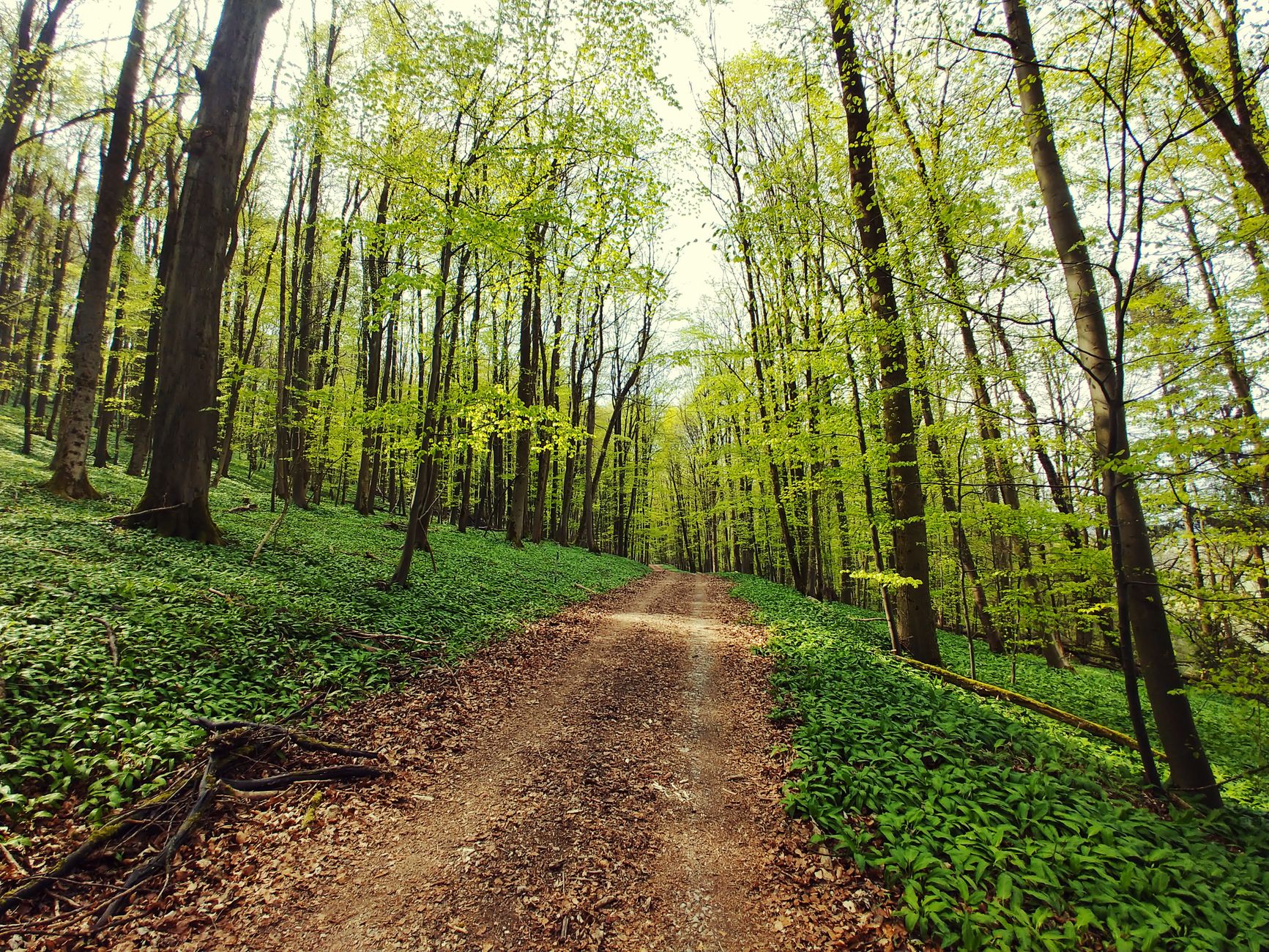
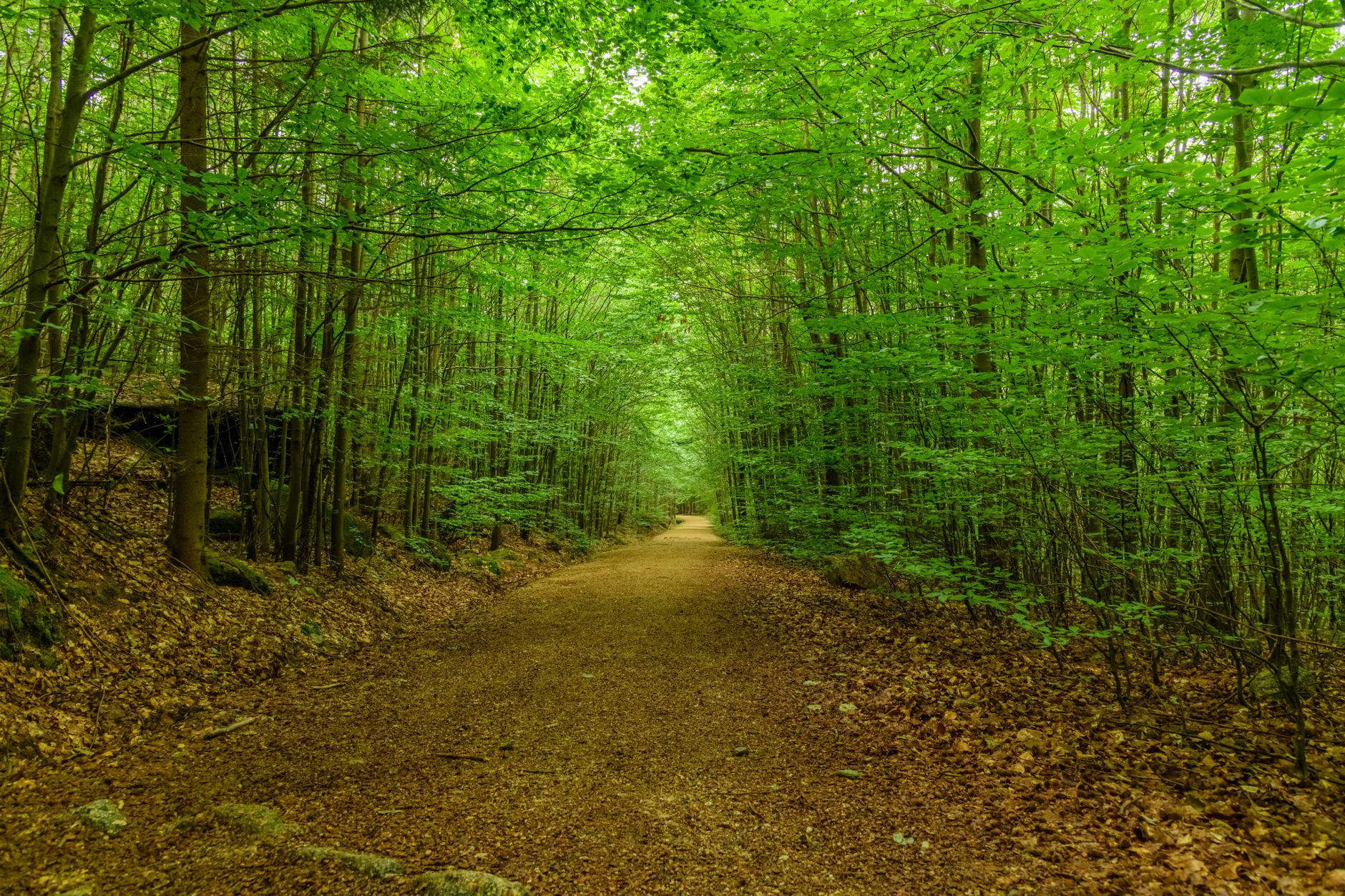
- Deliberately notice scale and detail. Look up at a tree canopy, watch how light moves on water, notice the texture of bark or the pattern of clouds — anything that invites a slightly larger perspective than your usual field of view.
- Slow your pace slightly. A walk aimed at noticing things works better slower than one aimed at covering distance.
This is not a medical intervention, and it will not replace treatment for clinical anxiety, depression, or chronic stress conditions. It is closer to a low-cost, low-risk habit that a reasonable body of early evidence suggests may help some people feel calmer, at least in the short term.
Who this may — and may not — help
Access to green space, mobility, safety, weather, and daylight hours are not equal for everyone, and outdoor time is not a substitute for adequate sleep, social support, or professional care when it is needed. For some people, even a few minutes of intentional outdoor attention seems to help mood in the moment; for others, especially under high chronic stress, a single walk will understandably not be enough to feel a difference. Treat this as one low-effort tool among several, not a stand-alone fix.
Making it stick
Habits outlast intentions when they are attached to something you already do. Pairing an awe walk with an existing routine — a lunch break, a dog walk, the commute portion you can do on foot — tends to work better than trying to add an entirely new block of time. Morning outdoor time in particular does double duty, since it also supports the kind of daily light exposure that helps anchor circadian rhythm.
Related reading
- Stress That Builds You: Reframing Pressure, Recovery, and Adaptation
- The Art of Equanimity: Finding Balance in Life
- Morning Sunlight and Circadian Health: A Simple Daily Anchor
This article is educational and not a substitute for professional medical or mental health advice.